
Exposé Online
What's old
Exposé print issues (1993-2011)
- 1 (October 1993)
- 2 (February 1994)
- 3 (May 1994)
- 4 (August 1994)
- 5 (October 1994)
- 6 (March 1995)
- 7 (July 1995)
- 8 (November 1995)
- 9 (March 1996)
- 10 (August 1996)
- 11 (February 1997)
- 12 (May 1997)
- 13 (October 1997)
- 14 (February 1998)
- 15 (July 1998)
- 16 (January 1999)
- 17 (April 1999)
- 18 (November 1999)
- 19 (May 2000)
- 20 (October 2000)
- 21 (March 2001)
- 22 (July 2001)
- 23 (December 2001)
- 24 (April 2002)
- 25 (September 2002)
- 26 (February 2003)
- 27 (August 2003)
- 28 (December 2003)
- 29 (April 2004)
- 30 (September 2004)
- 31 (March 2005)
- 32 (September 2005)
- 33 (May 2006)
- 34 (March 2007)
- 35 (January 2008)
- 36 (October 2008)
- 37 (July 2009)
- 38 (July 2010)
- 39 (Summer 2011)
Reviews
Curtis Reid — Omniumgatherum
(Gateway GRCD0102, 2002, CD)
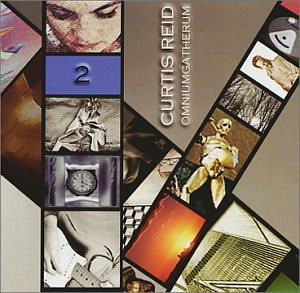
Curtis Reid’s sophomore collection of seven distinct pieces is a notch forward since his self-titled work from 1999. There is much to celebrate again for fans of Eric Johnson and Steve Morse, since Reid has firmly entrenched himself into that fertile area between guitar rock and fusion. Mario Mendivil handles all the bass duties for this album; “Application for President” probably showcases his pulsing attack the best on the disc. “The Ghosts of Narcissism” details Reid’s penchant for Allan Holdsworth’s phrasing (I.O.U. period) while the composer’s hammer-on technique with smooth fade-in and fade out gives the entire disc a lush backdrop. Female vocal introductions from Aimee Davis add another altogether texture to the pieces — both spiritual and spacious as on “Somewhere between Forgiveness and Theory.” “Time Won’t Change for Places to Wait” is a clever title for a blues track that owes debt to Clapton or Stevie Ray Vaughn. “James Marshall” is a thinly veiled ode to Jimi Hendrix that comes off like Gary Moore on the basis of passion and feel. Camel’s newest tour keyboardist Guy LeBlanc makes a notable Booker T. style organ contribution on the same piece. Reid’s songwriting has also expanded to cover atmospheric ground, a direction I surprisingly didn’t expect him to go into further. In summary, the next step for the guitarist should be to piggyback onto an opening slot for a name tour and get some nationwide exposure for his sensitive arrangements and finesse playing.
by Jeff Melton, Published 2002-09-01
When a minute and a half of ethereal voices and textural guitar experimentation gives way to a smokin’ instrumental rocker reminiscent of Eric Johnson at his best, the listener has to wonder what the rest of the disc has in store; indeed, this is a bag full of nice surprises, and a more adventurous step forward from Reid’s previous 1999 eponymous debut. He’s got the good sense to not make things too complex, with compositions allowing his rhythms, solos, and explorations enough room to make their case, with backing of electric bass and drums, and occasional organ. Using a guitar vernacular that draws equally from rock’s fire, the cerebral inclinations of jazz, and the passion of the blues, Reid moves freely between styles and takes no prisoners. Perhaps the most explorative piece is “Somewhere between Theory and Forgiveness,” basically a melodic ambient solo piece for guitar and pedals, with female vocals sharing the spotlight. From here he launches into “Time Won’t Change for Places to Wait,” a bluesy instrumental number that sometimes recalls Harvey Mandel’s Cristo Redentor LP infused with a rock edge and some tasty jazz interludes. On “James Marshall,” Reid adds vocals to a similarly bluesy rocker that works well, with Guy Leblanc’s crunchy Hammond adding a hard-driving incisiveness to the proceedings. The closer shows Reid’s jazzier side in an extended piece with a gentle perspective that often rivals Scofield or Metheny. In all, an outstanding second step showcasing the wider scope of Reid’s compositional abilities.
by Peter Thelen, Published 2002-09-01
Curtis Reid’s second release, Omniumgatherum, is a mostly-instrumental, three-piece journey though rock, jazz, fusion, and some blues. Reid’s influences on this album are really obvious. Omniumgatherum opens with some stormy, ominous atmospheric sound effects that build into the first band track — “Application for President.” It’s a fast-paced, Southern-sounding, twangy rocker that sounds a lot like Eric Johnson with a few harmonic and rhythmic twists. This track segues into two very Allan Holdsworth-sounding pieces, “The Ghosts of Narcissism” and “Somewhere between Theory and Forgiveness.” On the first of these two tracks, Reid manages to emulate both the slow, moody, complex chordal style as well as the blazing, high-tension solo style of Holdsworth. The opening of “Somewhere...” with its smooth female vocals brings something like “All Our Yesterdays” from Atavachron to mind. “Time Won’t Change for Places to Wait” opens with a bluesy guitar riff and jazzes out some before a ripping guitar solo busts in. This is perhaps the best guitar part on the album. Guy LeBlanc of Nathan Mahl contributes a few Hammond organ parts to the album, notably the great solo on the bluesy “James Marshall.” The closing song, “(They Say) The West Is Nice This Time of Year,” is a slow-groove jazz number with some cool brushwork from drummer Dan Tomlinson. It also features a melodic bass solo from Mario Mendivil. There are clear stylistic similarities at times to the artists previously mentioned, but the overall musicianship level is high throughout.
by Mike Grimes, Published 2002-09-01
Filed under: New releases, Issue 25, 2002 releases
Related artist(s): Guy LeBlanc, Curtis Reid
What's new
These are the most recent changes made to artists, releases, and articles.
- Release: Delirio and the Phantoms - Strange Phenomena
Updated 2026-10-14 11:49:35 - Review: Compassionizer - The Faithful of the Land
Published 2026-10-14 - Review: Wizrd - Elements
Published 2026-10-13 - Release: Dirk Serries - Curves of Splendor
Updated 2026-10-12 23:38:58 - Release: Emily A. Sprague - Cyano
Updated 2026-10-12 13:29:16 - Release: Emily A. Sprague - Cloud Time
Updated 2026-10-12 13:28:31 - Artist: Emily A. Sprague
Updated 2026-10-12 13:27:40 - Release: Maiah Wynne - Into the Waves
Updated 2026-10-12 13:13:23 - Release: Maiah Wynne - Out of the Dark
Updated 2026-10-12 13:05:25 - Artist: Maiah Wynne
Updated 2026-10-12 13:03:00 - Release: Icarus Peel - Purple Mirrorland
Updated 2026-10-12 12:57:50 - Release: Paul Dunmall - The Heart Centre
Updated 2026-10-12 12:55:45 - Release: Sonus Umbra - Liminality
Updated 2026-10-12 12:53:50 - Review: Various - My Human Digs Me Blues - Cats from Now to the 23rd Century
Published 2026-10-12 - Review: Mark Mulholland - Down Silver Streets
Published 2026-10-11 - Review: Stick Men - Let's THRAK Again
Published 2026-10-10 - Release: The Instigations - Miscreantics
Updated 2026-10-09 00:35:34 - Review: Malcolm Galloway - Stare
Published 2026-10-09 - Review: Shane Morris - Tenochtitlan to Etzanoa
Published 2026-10-09 - Review: The Shades - Basement Sessions 1978-1980
Published 2026-10-08
 This work
is licensed under a Creative Commons Attribution-NonCommercial-ShareAlike 3.0 Unported License.
This work
is licensed under a Creative Commons Attribution-NonCommercial-ShareAlike 3.0 Unported License.