
Exposé Online
What's old
Exposé print issues (1993-2011)
- 1 (October 1993)
- 2 (February 1994)
- 3 (May 1994)
- 4 (August 1994)
- 5 (October 1994)
- 6 (March 1995)
- 7 (July 1995)
- 8 (November 1995)
- 9 (March 1996)
- 10 (August 1996)
- 11 (February 1997)
- 12 (May 1997)
- 13 (October 1997)
- 14 (February 1998)
- 15 (July 1998)
- 16 (January 1999)
- 17 (April 1999)
- 18 (November 1999)
- 19 (May 2000)
- 20 (October 2000)
- 21 (March 2001)
- 22 (July 2001)
- 23 (December 2001)
- 24 (April 2002)
- 25 (September 2002)
- 26 (February 2003)
- 27 (August 2003)
- 28 (December 2003)
- 29 (April 2004)
- 30 (September 2004)
- 31 (March 2005)
- 32 (September 2005)
- 33 (May 2006)
- 34 (March 2007)
- 35 (January 2008)
- 36 (October 2008)
- 37 (July 2009)
- 38 (July 2010)
- 39 (Summer 2011)
Reviews
Jade Warrior — Eclipse
(ADCD1021, 1973/1998, CD)
Jade Warrior — Fifth Element
(HGB 123/10, 1973/1998, CD)
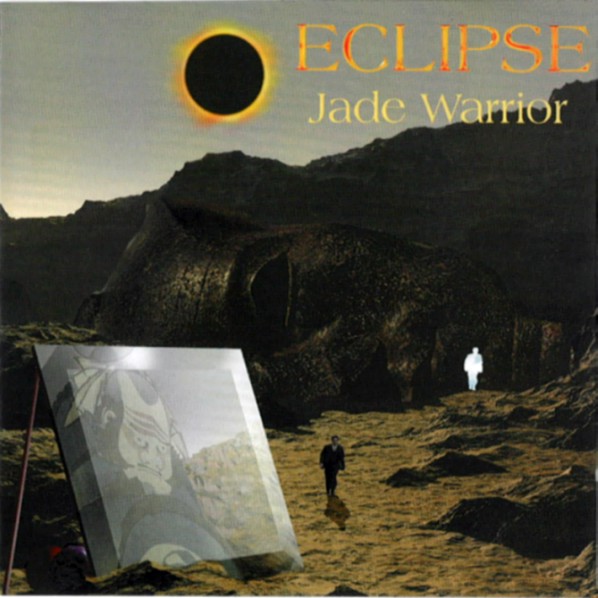
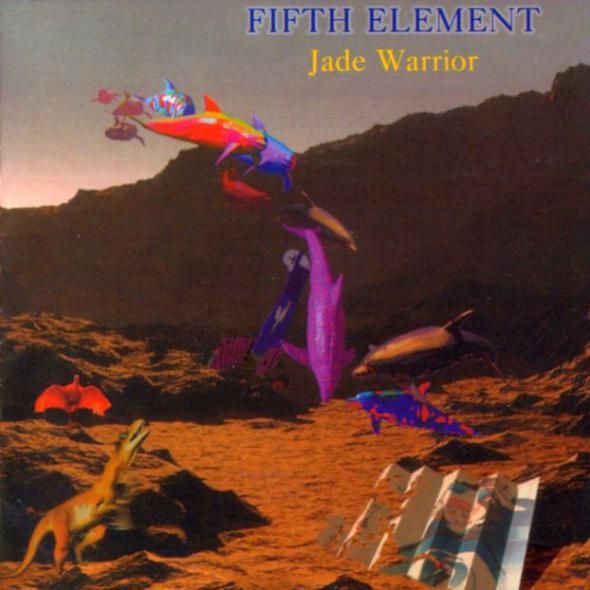
Jade Warrior has to be considered one of the 70s most innovative rock groups in both of their incarnations, the full-band version of the Vertigo albums and the duo version of the Island years. Their remarkable fusion of Western rock experimentation with Eastern stylisms has earned them an iconoclastic position in rock evolution. One would expect that the music of these two CDs, what were initially planned as a double album after their third album, Last Autumn’s Dream, would provide the missing link between the two styles, but this isn’t the case. Eclipse and Fifth Element are prime Vertigo-period Jade Warrior, a band still mixing raunchy fuzzed-out guitar with flutes, rock-n-roll with jazzy beat. Between the two CDs (one really isn’t complete without the other) you have 15 tracks, the longer ones generally being on Eclipse. You hear a lot about missing albums, but few fit as comfortably into a time period as these two do. I might even go as far to say that some of this is the peak of the period for Jade Warrior. As with their first three albums, the music on these CDs shows several musical directions. On Eclipse you have the folky ballads, represented by “English Morning,” jazzy percussion-led jams represented by “Sanga,” and a more hard rock style, represented by “Holy Roller.” Most of the time, these directions are combined, especially on the highlights of Eclipse, “Maenga Sketch” and “House of Dreams.” Fifth Element contains the other eight tracks, also contrasting delicate and beautiful pieces with more rock-based ones. “On the Mountain of Fruit” starts jazzy with distinct oriental motifs, “Discotechnique” is a great moving piece with outstanding guitar in the same vein as “24 Hour Movie,” both sounding like the music from their debut. Pieces like “Hey Rainy Day” and “Annie” are pastoral and tranquil, reflecting more of the percussion and flutes. It would have been interesting to see what the original tracking was as both of these two CD’s contain a similar flow. Great archival recordings, amongst some of the best in recent years, these CDs are essential listening, further proving what a classic band Jade Warrior was.
by Mike McLatchey, Published 2001-03-01
25 years can be a lifetime for unreleased albums suspended in limbo. Jade Warrior had recorded new material in late 1972 and planned to separate tracks into two albums across as many years. Unfortunately, their first label, Vertigo, folded before the fourth album, Eclipse could enter the LP bins, although a few tracks surfaced on rare sampler albums. Imagine my surprise on first listen, when each album picks up right where the band had left off and suddenly, you’re transported into a lush 70s timewarp! Both albums are literally in the same vein as the band’s Last Autumn’s Dream album. On that release, they had quantified their signature sound of samurai hard rock songs (such as on “Too Many Heroes”), gentle, soothing ballads (“English Morning” or “Hey Rainy Day”) and jazzy percussion workouts (“Song for a Soldier” and “Yam Jams”). Both Tony Duhig (guitars) and Jon Field (flutes) showcased a wide array of influences and directions in the early band’s seminal work. The role of bass and vocal, filled by Glyn Havard, was critical in helping to define the early group’s aggressive sound in this period. Lead guitarist Dave Duhig and drummer Alan Price augmented the original trio for these sessions, giving the group a fuller overall sound. The sole remaining original member, Field has taken great pains to find two labels to make these albums available to a silently appreciative audience. The quiet passive beauty of the chord changes on “We Are the One” are as stunning as what would later be refined on Waves (1975) and Kites (1976) despite how awkward the lead vocal sounds now. A preview of the future direction of the band is evident on “On the Mountain of Fruit” which hints at 1974’s Floating World, although the track is more acoustic here in early form. The two discs carry the stamp of a careful remastering job by Denis Blackman which makes these recordings the best sounding for the group on CD to date. While it’s merely a great day when an unavailable work by a band is found, it is a triumph when two solid albums are uncovered. Jointly, these discs are my choice for archive release of the year.
by Jeff Melton, Published 2001-03-01
1998 has turned out to be a windfall year for Jade Warrior fans. Anyone familiar with the band’s first three Vertigo label albums (reissued on CD with substandard sound quality by the German Line label in the late 80s) might have some idea as to what to expect from these two, which should have been the band’s fourth and fifth albums. The band went into the studio in 1973 to record their fourth album and came out with 75 minutes worth of material. Rather than release a double album, Vertigo initially decided to split it into two albums, then later, deciding they had a higher calling than progressive rock, Vertigo dumped Jade Warrior and these two fine albums sat in a vault for almost thirty years. Two songs from Eclipse were initially released on two different versions of the Vertigo Suck It and See sampler LP, and three other tracks ended up on the Jade warrior compilation LP Reflections (released on the Butt label in 1980), but this marks the first time the entire seven tracks have been released in their original running order. Fifth Element, on the other hand, has had none of its material surface, although the opener “On the Mountain of Fruit” was reworked into “Mountain of Fruit and Flowers” on the first Island LP, Floating World, in 1974. The series of events that led the full five-piece band on Vertigo in 1972 to emerge two years later as a duo on the Island label are detailed in the booklets of these two releases. Eclipse and Fifth Element provide the link between the band’s early sound, which was a mix of hard rock, world, folk, and jazz elements, featuring flute and hand percussion topped with plenty of dynamic juxtaposition, into the Island period duo who concentrated on the space, jazz, and world elements in an instrumental format while leaving the hard rock and vocals behind. While both of these albums are excellent, Eclipse probably has a slight edge, being a slightly more forward-looking and adventurous; perhaps the band sensed their fate with Vertigo and packed the best material on the first of the two discs to be released.
by Peter Thelen, Published 2001-03-01
Filed under: New releases, Issue 21, 1998 releases, 1973 recordings
Related artist(s): Jade Warrior
What's new
These are the most recent changes made to artists, releases, and articles.
- Review: Brand X - Theory of Nothing
Published 2026-10-19 - Review: Jeff Greinke - Land of Ice and Fog
Published 2026-10-18 - Release: Gustavo Denouard - Escape From The Real World
Updated 2026-10-17 00:25:56 - Release: Rudy Adrian - Southern-isles-sketchbook
Updated 2026-10-17 00:22:48 - Release: Kuhn Fu - Gam Gum Sopon
Updated 2026-10-17 00:20:23 - Release: Jeff Pearce - Infinite Ambient - Autumn Light (For Harold Budd)
Updated 2026-10-17 00:17:16 - Release: Aux_Out - Theologia Signalis
Updated 2026-10-17 00:13:08 - Review: Lumsk - Einsemda
Published 2026-10-17 - Release: Satoko Fujii Orchestra Tokyo - Kappa Ondo
Updated 2026-10-16 15:10:41 - Release: Andrew Leigh - Magician
Updated 2026-10-16 15:07:16 - Artist: Andrew Leigh
Updated 2026-10-16 15:05:54 - Release: Sonar - Movements and Interludes
Updated 2026-10-16 15:01:38 - Release: Strawbs - 50 Years On - Grave New World Live
Updated 2026-10-16 14:58:14 - Release: Leagus - Ulli
Updated 2026-10-16 14:49:00 - Release: Peter Daltrey - Three Windows
Updated 2026-10-16 14:47:37 - Release: Inclusion Principle - post_[*]
Updated 2026-10-16 14:46:12 - Review: Emily A. Sprague - Cyano
Published 2026-10-16 - Release: Fernando Molinari - Built by Elements
Updated 2026-10-15 23:13:08 - Release: Fernando Molinari - Reaching Inside
Updated 2026-10-15 23:11:16 - Release: Super Florence Jam - 60 Big Ones
Updated 2026-10-15 13:02:39
 This work
is licensed under a Creative Commons Attribution-NonCommercial-ShareAlike 3.0 Unported License.
This work
is licensed under a Creative Commons Attribution-NonCommercial-ShareAlike 3.0 Unported License.