
Exposé Online
What's old
Exposé print issues (1993-2011)
- 1 (October 1993)
- 2 (February 1994)
- 3 (May 1994)
- 4 (August 1994)
- 5 (October 1994)
- 6 (March 1995)
- 7 (July 1995)
- 8 (November 1995)
- 9 (March 1996)
- 10 (August 1996)
- 11 (February 1997)
- 12 (May 1997)
- 13 (October 1997)
- 14 (February 1998)
- 15 (July 1998)
- 16 (January 1999)
- 17 (April 1999)
- 18 (November 1999)
- 19 (May 2000)
- 20 (October 2000)
- 21 (March 2001)
- 22 (July 2001)
- 23 (December 2001)
- 24 (April 2002)
- 25 (September 2002)
- 26 (February 2003)
- 27 (August 2003)
- 28 (December 2003)
- 29 (April 2004)
- 30 (September 2004)
- 31 (March 2005)
- 32 (September 2005)
- 33 (May 2006)
- 34 (March 2007)
- 35 (January 2008)
- 36 (October 2008)
- 37 (July 2009)
- 38 (July 2010)
- 39 (Summer 2011)
Reviews
Agusa — Panacea
(Karisma KAR310, 2026, CD / LP / DL)
by Henry Schneider, Published 2026-07-10
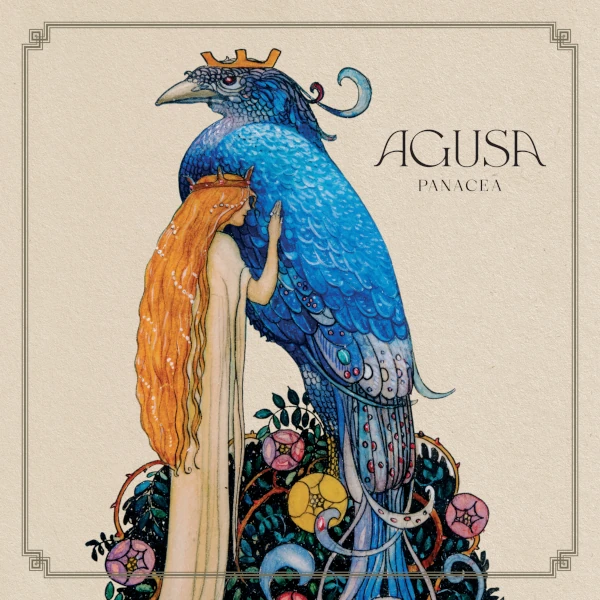
Over the last 13 years, Sweden’s Agusa has done something a lot of so-called “retro” prog acts never quite pull off: they’ve made the past feel present-tense. Yes, the ingredients are familiar — late-60s/early-70s prog, Scandinavian folk melodies, touches of Krautrock repetition — but this isn’t museum work. It’s muscle memory. It breathes, expands, contracts. Panacea (Live) drops us into Malmö on September 28, 2024 at the Progressive Circus Festival, and right away it’s clear these three long-form pieces have been road-tested into something stronger than their studio origin. They’re not just performed, they’re worked, stretched, leaned into. This is a band that knows where the edges are and how far they can push without tearing the fabric. The lineup — Jenny Puertas (flute, voice, percussion), Mikael Ödesjö (guitar), Nicolás Difonis (drums), Roman Andrén (Hammond organ), Simon Ström (bass) — is exactly what you want for this kind of material. Nothing ornamental, no wasted motion. Everyone’s listening, adjusting, recalibrating in real time. “Lust och Fägring (Sommarvisan)” opens to applause that barely has time to settle before Ödesjö starts threading a minor-key figure, patient, slightly tense, like it’s waiting for something to give. Andrén’s Hammond doesn’t enter so much as seep in, and from that point on it’s everywhere, binding, nudging, occasionally pulling focus without ever turning showy. The piece shifts through jazz-fusion inflections and tempo pivots, but what stands out is the control. Agusa doesn’t chase movement for its own sake. They build it, then let it breathe. “Den Förtrollade Skogen” leans harder into the folk core, and Puertas’ flute becomes the axis around which everything turns. It’s not decorative, it’s directional, guiding the band through passages that feel less composed than discovered on the spot. Difonis’ drum break is a highlight for all the right reasons: it’s about tension, space, the push-pull between presence and absence. When the band re-enters, Andrén kicks the Hammond into a higher gear, and for a moment the whole thing threatens to tip into a full-on burner, then they pull it back just enough to keep it from boiling over. “Ur Askan” closes things out with a different weight. The syncopation is tighter, more deliberate, almost architectural in how it frames the unfolding themes. About halfway through, Puertas’ vocals arrive, breathy, understated, and perfectly placed. It doesn’t shift the track so much as deepen it, adding a human layer without breaking the instrumental spell. Ödesjö picks up that thread on guitar, less soloing than extending the vocal line outward. By the end, Andrén is summoning cathedral tones from the Hammond, and the track lifts into something that feels earned—never forced, never exaggerated. Three tracks, all long, none indulgent. That’s the trick, and Agusa makes it look easy.
Panacea (Live) isn’t about proving anything. It’s about showing how a band inhabits its material after it’s had time to live, bend, and evolve. And here, every turn feels intentional—even when it sounds like it isn’t.
Filed under: New releases, 2026 releases
Related artist(s): Agusa
What's new
These are the most recent changes made to artists, releases, and articles.
- Review: Arabs in Aspic - Sorgens Kapittel
Published 2026-10-25 - Review: Kim Jin-Hi - The Jin Hi Kim Collection
Published 2026-10-24 - Review: Ruins - Cosa? (Experimental Works)
Published 2026-10-23 - Review: Refestramus - Morri's Rock Boutique
Published 2026-10-22 - Review: Peter Phippen & Eric "the" Taylor - Two by Twilight
Published 2026-10-21 - Review: Kolman & Calvert - The Pink Carnage of Cartilago
Published 2026-10-20 - Review: Brand X - Theory of Nothing
Published 2026-10-19 - Review: Jeff Greinke - Land of Ice and Fog
Published 2026-10-18 - Release: Gustavo Denouard - Escape from the Real World
Updated 2026-10-17 00:25:56 - Release: Rudy Adrian - Southern-isles-sketchbook
Updated 2026-10-17 00:22:48 - Release: Kuhn Fu - Gam Gum Sopon
Updated 2026-10-17 00:20:23 - Release: Jeff Pearce - Infinite Ambient: Autumn Light (For Harold Budd)
Updated 2026-10-17 00:17:16 - Release: Aux_Out - Theologia Signalis
Updated 2026-10-17 00:13:08 - Review: Lumsk - Einsemda
Published 2026-10-17 - Release: Satoko Fujii Orchestra Tokyo - Kappa Ondo
Updated 2026-10-16 15:10:41 - Release: Andrew Leigh - Magician
Updated 2026-10-16 15:07:16 - Artist: Andrew Leigh
Updated 2026-10-16 15:05:54 - Release: Sonar - Movements and Interludes
Updated 2026-10-16 15:01:38 - Release: Strawbs - 50 Years On - Grave New World Live
Updated 2026-10-16 14:58:14 - Release: Leagus - Ulli
Updated 2026-10-16 14:49:00
 This work
is licensed under a Creative Commons Attribution-NonCommercial-ShareAlike 3.0 Unported License.
This work
is licensed under a Creative Commons Attribution-NonCommercial-ShareAlike 3.0 Unported License.