
Exposé Online
What's old
Exposé print issues (1993-2011)
- 1 (October 1993)
- 2 (February 1994)
- 3 (May 1994)
- 4 (August 1994)
- 5 (October 1994)
- 6 (March 1995)
- 7 (July 1995)
- 8 (November 1995)
- 9 (March 1996)
- 10 (August 1996)
- 11 (February 1997)
- 12 (May 1997)
- 13 (October 1997)
- 14 (February 1998)
- 15 (July 1998)
- 16 (January 1999)
- 17 (April 1999)
- 18 (November 1999)
- 19 (May 2000)
- 20 (October 2000)
- 21 (March 2001)
- 22 (July 2001)
- 23 (December 2001)
- 24 (April 2002)
- 25 (September 2002)
- 26 (February 2003)
- 27 (August 2003)
- 28 (December 2003)
- 29 (April 2004)
- 30 (September 2004)
- 31 (March 2005)
- 32 (September 2005)
- 33 (May 2006)
- 34 (March 2007)
- 35 (January 2008)
- 36 (October 2008)
- 37 (July 2009)
- 38 (July 2010)
- 39 (Summer 2011)
Reviews of Profiles
Showing items 31 to 34 of 34
Kunst macht frei —
A Profile of Area
 1973 was a fertile time for music and musicians. As in any period of time, there were many minds questioning the so-called conventions of music and the music industry. The time was ripe for experimentation and the combining of disparate sound and styles in ways never before imagined. However, in the early 70s in Italy, artists did not automatically consign themselves to obscurity by doing so. Area was born of a strong political commitment, largely due to the polarized, fragmented political climate in Italy. Their political message was not hidden in comfortable and familiar pop-song structures; instead they challenged the listener with music as unsettling and difficult as their radical social ideas. » Read more
 (Posted by Mike Borella 1995-07-01)
A Phenomenological Phishing Expedition —
A Profile of Phish 1995
 The phenomenon of Phish is a bit of an enigma. Playing music that for the most part ranges from not-particularly-commercial to wildly eclectic to seriously challenging, they are selling out large venues and even setting concert attendance records across the country. But while their fanbase has grown exponentially over the decade or so of their existence, they continue to receive little more than token mention in the music press, and what mention there is often tends to be horribly misguided and misinformed. So what is it about Phish that fans find so addictive yet critics and the music community as a whole seem to find so ungraspable? » Read more
 (Posted by Rob Walker 1995-07-01)
From a Caricature to an Ambush —
Ange in the 70s
 In the light of Musea's new tribute A Propos d'Ange and a new solo album by Christian Décamps, Exposé felt it would be an ideal time to take a look back at what was the beginning and arguably the peak of the career of one of France's most innovative and influential rock groups. » Read more
 (Posted by Mike McLatchey 1994-10-01)
Before There Was a Label —
Looking at the Beginnings of Progressive Rock
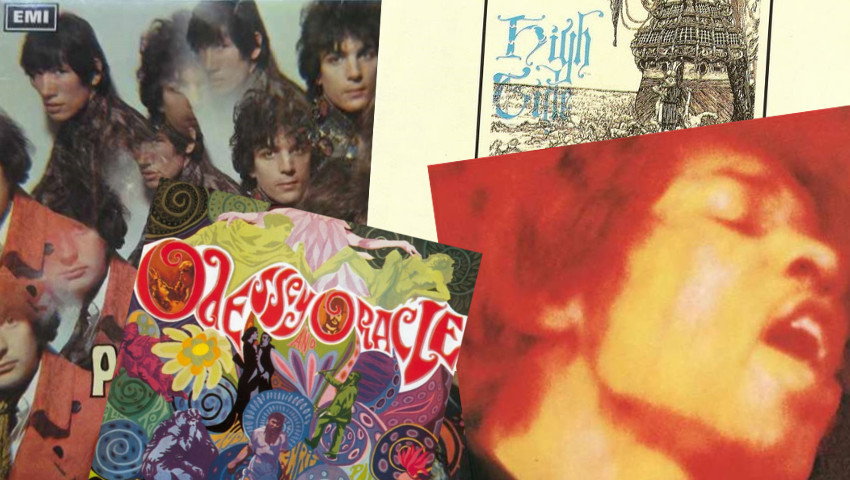
It's almost October 1994. That means it was almost 25 years ago that King Crimson's debut album In the Court of the Crimson King was released on both sides of the ocean, and the term "Progressive Rock" was born — at first a trend that grew out of the late 60s musical awareness that elevated the importance of the instrumentation and soloing while diminishing the importance of the singer, the lyrics, and the old song structure that had remained essentially unchanged since the early 50s.
» Read more(Posted by Peter Thelen 1994-08-01)
What's new
These are the most recent changes made to artists, releases, and articles.
- Release: Tic Tic - Capsule
Updated 2026-10-27 12:19:43 - Release: Soft Hearted Scientists - Cabin!
Updated 2026-10-27 12:18:13 - Review: Kavus Torabi - October by Name
Published 2026-10-27 - Release: Spirits Burning & Michael Moorcock - The End of All Songs - Part 2
Updated 2026-10-26 15:58:08 - Release: Spirits Burning & Michael Moorcock - The End of All Songs - Part 1
Updated 2026-10-26 15:51:47 - Release: Paolo Almeida - Love in Motion
Updated 2026-10-26 14:05:27 - Artist: Paolo Almeida
Updated 2026-10-26 14:01:26 - Release: Paulina Fae - The Way That Only Night Can See
Updated 2026-10-26 13:55:02 - Review: Spontaneous Rex - Cataclysm
Published 2026-10-26 - Release: Phillip Golub - Loop 8/9
Updated 2026-10-25 22:16:36 - Release: Seveneves - Rush Hour Secrets
Updated 2026-10-25 19:02:21 - Artist: Seveneves
Updated 2026-10-25 19:01:30 - Release: Khu.éex’ - Khu-Tron: Cloned Hardware
Updated 2026-10-25 18:51:58 - Release: Los Nuevos Médiums - Los Nuevos Médiums
Updated 2026-10-25 18:49:27 - Artist: Los Nuevos Médiums
Updated 2026-10-25 18:47:19 - Release: Sendelica - Nirmata II: Journey to the Stars
Updated 2026-10-25 18:41:44 - Release: Jay Tausig - An Introduction to Jay Tausig
Updated 2026-10-25 18:38:40 - Release: La Nouvelle Musique - Celluloid
Updated 2026-10-25 18:36:32 - Release: Chercán - Canto de Silicio
Updated 2026-10-25 18:20:08 - Release: Andy Juhl - Go Where the Sun Goes
Updated 2026-10-25 18:15:21
 This work
is licensed under a Creative Commons Attribution-NonCommercial-ShareAlike 3.0 Unported License.
This work
is licensed under a Creative Commons Attribution-NonCommercial-ShareAlike 3.0 Unported License.